

Who Was Mimar Sinan? Learn About His Life and Works
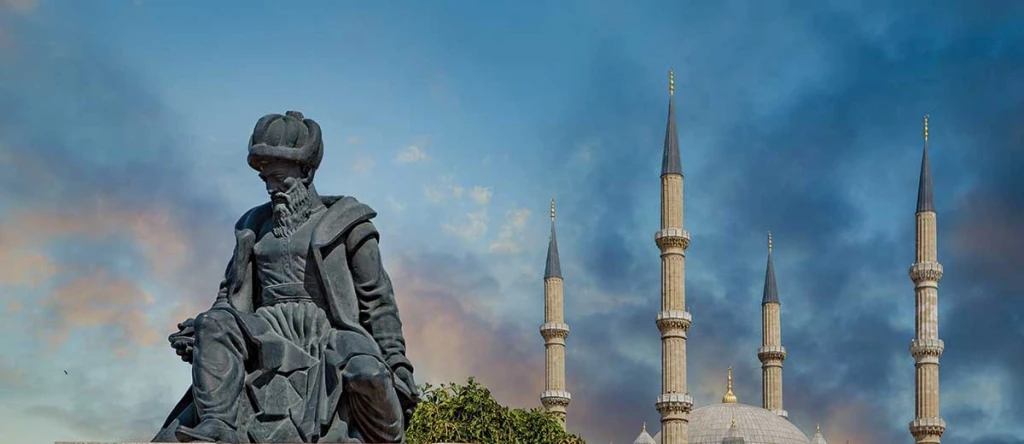
The chief architect of the most brilliant period of Ottoman architecture, Mimar Sinan, is regarded as one of the greatest architects not only of his own era but of all time. Carrying the architectural understanding of his period to its peak, Sinan built an architectural philosophy in which aesthetics, durability and functionality were blended together—not just structures. Today his name lives on through mosques, bridges, caravanserais, madrasas and aqueducts across the Ottoman geography, especially in Istanbul.
A Brief Life of Mimar Sinan
Birthplace, Family and Early Years
Although there are various accounts regarding Mimar Sinan's birth, most historians accept that he was born in 1489–1490 in the village of Ağırnas in Kayseri. Born into a Christian family, Sinan was brought to Istanbul at a young age under the devşirme system applied by the Ottoman State and was educated in the Enderun.
Although detailed information about his family and childhood is scarce, it is known that he was the child of a peasant family and had an aptitude for handcrafts such as stonework and carpentry from an early age. The practical craftsmanship skills he acquired during this period laid the foundations of his architectural career.
Joining the Janissary Corps and Military Engineering Training
After his education in the Enderun, Sinan joined the Janissary Corps and began serving in the Ottoman army. Distinguishing himself as a capable soldier and technical expert, Sinan took on the task of building bridges, fortresses and temporary structures during campaigns; he developed important engineering solutions especially during the Belgrade Campaign, the Rhodes Campaign, the Battle of Mohács and the Baghdad Campaign.
This period allowed him to gain great experience both in material knowledge and in construction techniques. Sinan attracted attention with the solutions he developed under wartime conditions and demonstrated the ability to build practical, functional and durable structures, unlike classical architecture.
The Transition to Architecture
After the death of Acem Ali, the chief architect of the Ottomans, in 1538, Sinan was appointed "Hassa Chief Architect" at the age of 50. This was the highest rank of the palace architecture system, and Sinan was now responsible not only for Istanbul but for architectural projects across all Ottoman lands.
With this appointment, Sinan became both the founding leader of classical Ottoman architecture and the representative of an architectural school. From the beginning of his architectural career, he built hundreds of structures, balancing simplicity, functionality, grandeur and aesthetics. His style is a turning point not only within the Ottoman Empire but across Islamic architecture as a whole.
Mimar Sinan's Role in the Ottoman State
Mimar Sinan is the chief architect of the Ottoman State who served the longest and built the most works. During his roughly 50 years in office, he designed and implemented hundreds of structures—from mosques to bridges, from baths to madrasas—not only for the palace but in cities across the empire. His architectural vision formed the basis of an architectural understanding that spread the Ottoman aesthetic sense and technical power across both time and geography.
His Appointment to the Chief Architect Post
In 1538, Mimar Sinan was appointed to the "Hassa Chief Architecture" post, the highest architectural office of the Ottomans. His selection for this post was the result of standing out not only for his construction skills but also for his engineering intelligence, project management and aesthetic approach. The Hassa Chief Architect was responsible for all major constructions carried out on behalf of the sultan; he designed and supervised projects and trained architects.
Sinan's assumption of this post is also a major turning point in the institutionalization of architecture in the Ottoman Empire. Building production was no longer left only to craftsmen but took shape through central planning and supervision. Mimar Sinan was both the founder and the most important practitioner of this system.
Periods of Yavuz Sultan Selim, Kanuni Sultan Süleyman, Selim II and Murad III
Mimar Sinan witnessed the reigns of four Ottoman sultans and worked directly with three of them in particular:
- Yavuz Sultan Selim (1512–1520): Corresponding to Sinan's youth, during this period he joined the Janissary Corps and experienced his first campaigns.
- Kanuni Sultan Süleyman (1520–1566): This was the period when Sinan was most active both as a soldier and as an architect. He was appointed chief architect in this period and realized his greatest projects such as the Süleymaniye Mosque, the Şehzade Mosque and the Haseki Complex during this process. Kanuni's vision nourished and supported Sinan's architectural understanding.
- Selim II (1566–1574): In this period, when Sinan's mastery works intensified, the Selimiye Mosque (Edirne) was built. This mosque, which he called "my masterpiece," is regarded as the peak both architecturally and engineeringly.
- Murad III (1574–1595): This corresponds to Sinan's old age. During this period he worked as an advisor and played an active role in training new architects.
His Role in Palace and Public Buildings
Mimar Sinan did not only build mosques and complexes; he also undertook a role that shaped the Ottoman understanding of urban planning. As chief architect, he:
- Palace structures: Was involved in arranging various sections of Topkapı Palace, additions to the harem quarters and infrastructure projects such as waterways.
- Infrastructure works: Carried out public service projects such as aqueducts (especially the Kırkçeşme Water Works in Istanbul), bridges, baths and roads.
- Educational and religious buildings: Guided the social and cultural life of Ottoman society with madrasas, tekkes and tombs.
Mimar Sinan was a figure who understood that architecture is not only "constructing buildings" but also shaping a civilization. From the palace to the most remote province, traces of him can be found at every point of the empire.
Mimar Sinan's Most Important Works
Mimar Sinan's works are the highest points reached by Ottoman architecture. He himself defined a journey of mastery by classifying his works into three categories: apprentice, journeyman and master works. This classification helps us understand his architectural development both technically and artistically. However, Sinan's genius was not limited to mosques; it extended to many building types, from bridges to madrasas, from caravanserais to water channels.
Şehzade Mosque (Apprentice Work)
The Şehzade Mosque is the first major imperial mosque Mimar Sinan built in Istanbul and the structure he defined as his "apprentice work." It was commissioned by Kanuni Sultan Süleyman between 1543 and 1548 in memory of his son Şehzade Mehmed, who died at a young age.
- Architectural features: Built on a central plan with four semi-domes, the mosque reflects the developing form of classical Ottoman architecture.
- Courtyard and madrasa: The arcaded structure in its courtyard and the adjacent buildings reinforce the social dimension of the mosque.
- Decorations: Fine stonework, unclassicized original experiments and decorative elegance stand out.
This work reveals Sinan's pursuit of balance, aesthetics and engineering on the path to mastery.
Süleymaniye Mosque (Journeyman Work)
The Süleymaniye Mosque is Sinan's journeyman-period work, built in Istanbul between 1550 and 1557 for Kanuni Sultan Süleyman, the powerful ruler of the Ottomans. This structure represents the power of the Ottomans both architecturally and symbolically.
- Architectural grandeur: The central dome is 53 meters high and has a diameter of 26.5 meters. Acoustics and light distribution are masterfully arranged.
- Complex structure: It is a complete social complex with units such as a madrasa, hospital, bath, library and imaret.
- Location and composition: Built on a hill dominating the Istanbul skyline, the mosque plays an important role both in urban planning and spirituality.
Süleymaniye is not merely a place of worship but the architectural expression of an imperial vision.
Selimiye Mosque (Master Work)
The Selimiye Mosque is what Mimar Sinan called "my masterpiece." Built in Edirne between 1568 and 1575 for Selim II, this structure is the peak of Sinan's architectural genius.
- Architectural marvel: The dome, 43.25 meters in diameter, is seated on four elephant feet and provides an extraordinary openness in the interior space.
- Aesthetics and light: The way light enters, the balance of the dome and the integrity of the space represent the most advanced point reached in classical Ottoman architecture.
- Minarets: The four minarets, 71 meters high, create a perfect aesthetic balance with the dome.
Included in the UNESCO World Heritage List, Selimiye is regarded as one of the masterpieces of Islamic architecture.
Bridges, Caravanserais, Madrasas and Other Architectural Structures
Mimar Sinan's art was not limited to large mosques. He also shaped Ottoman urban life by designing all the public buildings society needed:
- Bridges:
- Büyükçekmece Bridge (Istanbul)
- Restoration of the Malabadi Bridge
- Silivri Bridge
- Caravanserais:
- Rüstem Pasha Caravanserai (Edirne)
- Kırkçeşme Caravanserai (around Istanbul)
- Madrasas and baths:
- Haseki Madrasa, Süleymaniye Madrasas, Sokollu Mehmed Pasha Bath
- Water works:
- Kırkçeşme Water Works, the most comprehensive project organizing Istanbul's drinking water system.
These structures show that he was not only an architect but also an urban designer and social engineer.
Architectural Style and Artistic Approach
Mimar Sinan was not merely a master who built structures; he was an innovative and visionary artist in shaping space, directing light and integrating social functionality with aesthetics. His architectural understanding synthesized tradition and innovation, forming the peak of Classical Ottoman architecture.
Mimar Sinan's Architectural Understanding
Sinan's architectural approach rests on melting functionality and aesthetics in the same crucible. In each of his structures he develops a design suited to the spirit of the space, the structure of the environment and the purpose of use. For him, architecture was not just an art but also a way of producing structures that serve society.
- His buildings have non-uniform, continuously evolving and changing plan schemes.
- Sinan produced an architecture based on experimentation and observation, which distinguishes him from his contemporaries.
- In every structure, scale, proportion, environmental harmony and social use were treated as priorities.
Symmetry, Use of Light and Acoustics in His Works
One of the most striking features of Sinan's works is their flawless symmetry and balance. Preferences for central plans, the dome–semi-dome relationship in mosques, and the harmony between mosque courtyards and interior space are designed on this principle.
- Light: The dramatic and functional use of natural light in the structures is remarkable. Windows opening beneath the dome both illuminate the space and give a sense of depth.
- Acoustics: Especially in large structures such as the Süleymaniye and Selimiye Mosques, special acoustic arrangements were made so that sound reverberates without scattering in the space. It is even rumored that in some structures empty jars were embedded within the dome to distribute sound.
Contributions to Classical Ottoman Architecture
Mimar Sinan is the name that defines the "classical period" of Ottoman architecture. Under his leadership:
- The domed building system matured,
- The complex (külliye) concept in religious architecture became systematic,
- Innovations were applied in construction technology, especially in load-bearing systems.
Mimar Sinan expanded the scope of architecture not only in mosque architecture but also in urban planning, infrastructure systems and the holistic design of public buildings.
Legacy and Influence of Mimar Sinan
Mimar Sinan's works have become enduring building blocks not only of an era but of the entire Islamic world and world architectural history. Despite centuries of continuity, most of his structures still stand and are in use. This is an indication of his technical knowledge, aesthetic intuition and meticulousness regarding building materials.
Effects from the Ottomans to Today
The architectural heritage Mimar Sinan left directly influenced Ottoman architects of the 17th and 18th centuries. His works were used like "schools" in the training of Hassa architects.
- Even the architects of the Tulip Era, where Baroque and Rococo influences are visible, based their structural systems on Sinan's.
- Even in the Tanzimat period, public buildings remained faithful to his planning understanding.
- Even today, Sinan's designs are accepted as references in restoration, reconstruction and planning work.
His Place in Turkish and World Architecture
Mimar Sinan is worthy of being mentioned alongside great names in world architectural history such as Leonardo da Vinci, Michelangelo and Le Corbusier. His works:
- Have been accepted as World Heritage by UNESCO.
- Are taught as analysis and reference examples in many architecture faculties abroad.
- Have served as the basis for numerous structures built in the Islamic world beyond the Ottomans (for example in the Balkans and the Middle East).
Aspects That Inspire Modern Architects
Sinan's architecture offers contributions to the modern era not only in form but in principle:
- Functional design, with spaces that are both aesthetic and practical, has paved the way for contemporary architecture.
- From the perspective of sustainability, the use of local materials, natural ventilation and spatial arrangements working with light are regaining value in today's architecture.
- Architectural simplicity and integrity represent an approach that can be read in parallel with the minimalism movement.
Mimar Sinan is the architect not only of the past but also of the future.
Little-Known Facts About Mimar Sinan
Mimar Sinan left his mark on history not only through his works but also through his personality, and many legends and anecdotes are told about him. To understand his value not only for architecture but also for the history of humanity, it is necessary to examine these lesser-known aspects.
Building His Own Tomb
Mimar Sinan personally designed and built his own tomb, located in a modest area right next to the Süleymaniye Mosque Complex in Istanbul. This tomb, simple yet elegant and free of ostentation, reflects his humility in his view of life and death. According to a legend, the opening on the front facade of the tomb was deliberately left open to emphasize that "nothing is ever complete."
Legends, Memories and Tales
- Acoustic tests in the dome: It is said that he placed empty jars inside the dome to achieve the excellent acoustics of the Selimiye Mosque.
- The story of inverted minarets: It is rumored that the inverted minaret motifs in some structures in Istanbul were "faulty structures" made by apprentices for training purposes.
- The cleanliness of Süleymaniye: It is told that the stones used in construction were washed with special soaps before being placed, so that for years they needed no cleaning.
Such narratives reveal, alongside his technical knowledge, that he also had a mystical and symbolic dimension.
Places Where His Name Is Kept Alive Today
Mimar Sinan's name is kept alive in countless institutions, streets, schools and monuments in Turkey and around the world:
- Mimar Sinan Fine Arts University (Istanbul): One of Turkey's most established institutions providing art and architecture education.
- Mimar Sinan neighborhoods and streets: Streets and districts bearing his name can be found in nearly every city in Turkey.
- Mimar Sinan statues and monuments: Statues have been erected in cities such as Edirne, Kayseri and Istanbul, and his life is exhibited in various museums.
- Mimar Sinan House (Kayseri/Ağırnas): His house in the village where he was born has been restored, turned into a museum and kept open to visitors.
Conclusion: An Architect Who Transcends the Ages
The Thought Behind Mimar Sinan's Genius
Mimar Sinan possessed not only technical knowledge but also a deep worldview. His architecture gains meaning from the balance he established between faith, nature, society and art. Each of his structures is not only a building but also an idea, a philosophy, a way of life.
- Measure in aesthetics,
- Innovation in engineering,
- Simplicity in function,
- Harmony between humans and nature...
These are the building blocks of Sinan's genius that transcends the ages. His architecture is not the work of a period but a universal perspective.
Architects and Artists Who Followed His Path
Mimar Sinan's legacy was not limited to the Ottoman architects who followed him; it has also been influential on modern Turkish architecture and even on world architects:
- Mimar Kemaleddin and Vedat Tek continued Sinan's line in the revival of Turkish architecture.
- Le Corbusier wrote that he drew great inspiration from Süleymaniye and Selimiye during his trip to Istanbul.
- Today's architects still accept Sinan's planning understanding and structural intelligence as references.
Mimar Sinan is the architect not only of the past but also of the future.