

Salsa Rhythms and Classic Cars: A Journey Through Time in Cuba
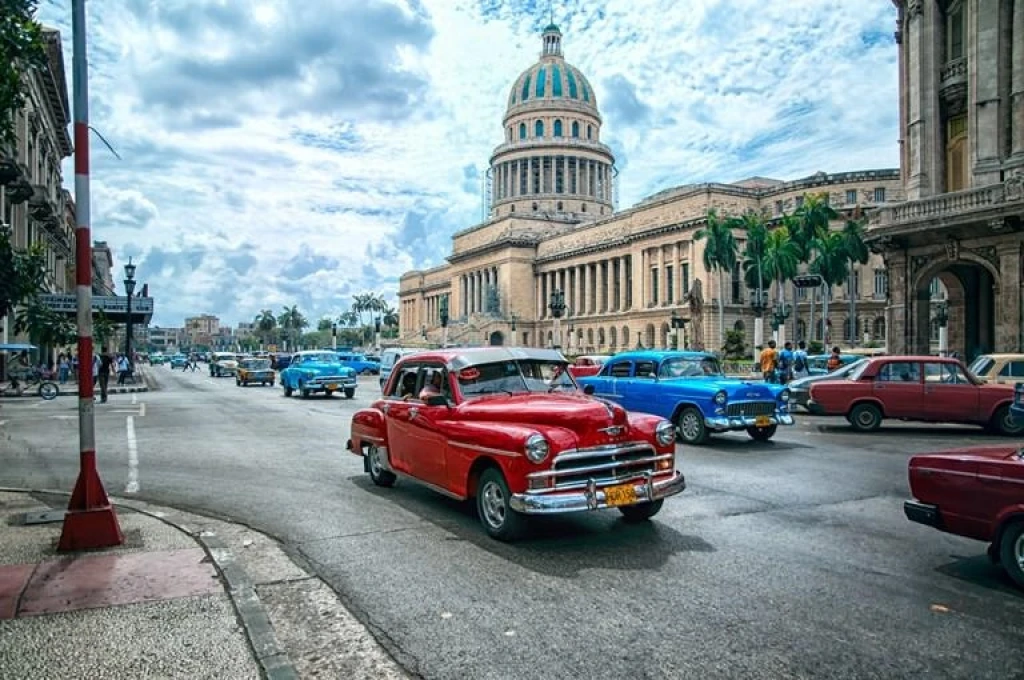
Cuba is more than just a country; it is an atlas of feelings full of color, rhythm, and history. With salsa melodies that suddenly catch your ear on its streets, classic cars from the 1950s that pass by you, and murals bearing the mark of the revolution, this island takes its visitors on a journey through time. In Havana's pastel-toned buildings the past is still alive; on the beaches of Varadero, nature and tranquility merge. Wi-Fi is limited, technology is restricted, but human warmth and life energy are boundless. Going to Cuba is far more than a Caribbean holiday: it is a journey you will feel with your heart
Introduction to Cuba: A Journey into a Colorful Time Capsule
Cuba is not only a Caribbean island; it is also a time capsule adorned with history, music, and nostalgia. Its architecture, shaped in the shadow of the revolution, its colorful classic cars from the 1950s, and the salsa melodies rising at every corner create a unique atmosphere that transports visitors back in time. This island nation, where technology does not flow rapidly, and where people greet each other by dancing in the streets, reminds the modern world of the rhythm and spirit it has forgotten. Traveling in Cuba is not just a vacation; it is walking through a living history, feeling the stories absorbed into its walls, and experiencing life in all its simplicity.
Where Is Cuba, and What Kind of Place Is It?
Cuba, known as the jewel of the Caribbean, is an island nation belonging to the American continent. It is only 150 km from the coasts of Florida, yet spiritually it is a completely different universe.
- Its capital, Havana, is a center where culture, history, and music blend together.
- Its streets are filled with classic American cars, the building facades are pastel-colored, and the people are warm-hearted and passionately attached to rhythm.
Cuba is small on the map, but a vast world in spirit.
History, Revolution, and the Rhythm of the Streets
Cuba is not merely a destination; it is a character shaped by history.
- The Cuban Revolution of 1959 completely transformed the country's political and social structure.
- The traces of the revolution are not only found in the Che Guevara murals, but in every moment of daily life.
- At the same time, Cuban music, especially rhythms such as salsa, mambo, and son, are living energies in the city's streets.
An island that defies its history and embraces it with its music.
Why Does Cuba Feel Like a Journey Through Time?
When you set foot in Cuba, time seems to have stopped.
- Colorful cars from the 1950s still run on the streets, and buildings with crumbling facades that still preserve their grandeur are still standing.
- Wi-Fi is still a luxury, digital connections are slow, but people focus on face-to-face communication and rhythm.
- Everything being slow, genuine, and sincere gives visitors a nostalgic sense of intimacy.
Cuba is an experience far from the speed of the modern world, one that takes people back to the past.
Havana: The Capital of Nostalgia
Cuba's heart, Havana, is the answer to the question of how a city's past can live on in the present. Its buildings, whose colorful facades have faded yet still retain their elegance, the lively sounds of music rising in narrow streets, and the coastal roads embraced by the ocean breeze… All of them come together and tell their visitor
a story that is both romantic and revolutionary.
Walking in Havana is like wandering among history books; on one side colonial squares dating back to the 16th century, on the other the silhouette of Che Guevara.
On the stone streets of Habana Vieja
, traces of the past can be felt with every step. This city, lively with salsa melodies at night, wakes up in the mornings with the scent of coffee and cigars. Havana is not merely a capital; it is
a timeless place that carries the soul of Cuba.
Old Havana (Habana Vieja) and Colonial Architecture
Habana Vieja, on the UNESCO World Heritage list, bears the traces of time with its colorful facades, narrow stone streets, and colonial-style balconies.
- Cathedral Square, Plaza Vieja, and the Capitolio are the architectural memory of the city.
- Wandering here is like discovering an era, not just a neighborhood.
Every stone and every window carries the whispers of pre-revolution Cuba.
Sunset Along the Malecón Seafront
The Malecón, stretching for eight kilometers along the sea, is the heart of Havana.
- In the evening hours, people gathering here make music, dance, and chat.
- The sky, turning the color of the ocean as the sun sets, offers a romantic and peaceful view.
Walking along the Malecón is feeling Havana in its simplest and most sincere form.
Revolution Square, the Traces of Che and Fidel
Plaza de la Revolución is one of the most powerful symbols of Cuban history.
- Giant portraits of Che Guevara and Camilo Cienfuegos are engraved on the facades of government buildings.
- This square, which hosted Fidel Castro's most important speeches, is the ideological heart of Cuba.
Every step taken here is like a mark left in history.
Street Musicians and Dance Events in Havana
The streets of Havana are, in the truest sense, a city where music lives.
- Groups playing live music at every corner fill the city with salsa and son melodies.
- Open-air dance events in the evenings offer perfect opportunities both to mingle with locals and to experience Cuban culture.
Here, music is not a backdrop; it is life itself.
Cuba's Classic Cars: A Music Box on Asphalt
As you wander the streets of Cuba, the first thing you encounter is neither revolutionary posters nor the sea breeze — it is the colorful classic American cars from the 1950s that make you feel that time has stood still.
Chevrolets, Buicks, Cadillacs… Each painted in vivid colors, carefully restored, and still gliding proudly on the roads, they are nostalgic jewels. They are not just means of transportation, but also Cuba's cultural heritage on the street.
Most of these cars were imported before the revolution and have been kept alive for over half a century through repairs, love, and patience. That is why each one carries the history of the country as much as the effort of its owner.
When you join a classic car tour, you discover not only the streets of Havana, but the rhythm, aesthetics, and soul of an era. And in that moment, as the wind tousles your hair, the sound of a trumpet rises in the background: you realize you are moving along a music box on asphalt.
Colorful American Cars from the 1950s
These cars, which have become the iconic image of Cuba, are Chevrolet, Buick, Cadillac, and Ford models imported before the revolution and still kept in working condition.
- With their bright blue, pink, red, and green colors, they give the feeling of walking through a film set.
- These cars are not just vehicles; they are like nostalgic works of art.
In Cuba, one does not use a car; one uses time.
Classic Car Tours: Where and How to Join
- The most popular tours are offered in cities such as Havana, Trinidad, and Cienfuegos.
- Tour duration is usually between 1 and 3 hours. It can be supported with historical information from a guide.
- Various packages are available, from airport transfers to city tours.
Tours starting in front of "El Capitolio" in Havana cover the city's most magnificent routes.
Photo Spots and Short Routes
- El Capitolio, Gran Teatro, Malecón, and the Vedado neighborhood are ideal photo spots.
- The classic car tour from Plaza de la Revolución to the Malecón at sunset is especially recommended.
- With the choice of car colors and backdrops, it is possible to capture unforgettable frames for social media.
Posing in a classic car in a classic city: capturing the soul of Cuba in the frame.
Salsa and Cuban Music: Discover the Rhythm of the Soul
It is impossible to describe Cuba without its music. In this country, music is not just an art form; it is a way of life, a language of communication, and a collective memory. The rhythms echoing from every street corner carry the soul of Cuba; salsa is the most lively expression of this soul.
The roots of Cuban music lie in the blend of Africa's rhythmic heritage and Spanish melodies. Salsa is the best-known and most outward-facing form of this mixture. However, genres such as son, rumba, bolero, and cha-cha-cha still live among the people and come alive on stage. Each tells a different story and moves you with a different rhythm.
Here, music is not merely listened to; it is lived, felt, and shared. The steps you learn during the day in dance classes turn into real experiences at night, at street concerts or in a music house.
Discovering rhythm in Cuba is, in fact, rediscovering yourself — because while dancing, time disappears and only the soul remains.
Differences Between Salsa, Son, and Rumba
Cuban music makes you dance not only with your ears but with your soul.
- Son is the heart of Cuban music; born in the 19th century, it carries both European and African rhythms within it.
- Rumba is more traditional and based on improvisation; it is mostly performed with percussion instruments.
- Salsa, on the other hand, has a more modern, more urban sound and was born from the evolution of son. Salsa is the dance of movement and mutual energy.
Each is a different story, a different dance, a different Cuba.
Places to Hear Live Music
Especially in Havana and many other Cuban cities, music starts on the street but moves to special venues at night:
- Venues such as the Buena Vista Social Club present traditional Cuban melodies with modern interpretations.
- La Zorra y el Cuervo (Havana) and Casa de la Trova (Santiago de Cuba) are notable addresses for live jazz and salsa.
- Mini concerts set up on any street corner with a guitar and maracas are unforgettable surprises.
In Cuba, music is not decoration; it is the essence of the atmosphere, the voice of the culture, the breath of the people.
Dance Classes, Nights Out, and the Festival Calendar
To dance in Cuba, you do not need to be a professional — as long as there is rhythm within you.
- Daily dance classes are common for tourists, especially in Havana and Trinidad. Salsa, Bachata, and Cha-Cha-Cha lessons suit every level.
- At night, dance clubs bring local people and tourists together on the same floor, accompanied by live music.
- One of the biggest events is the Havana International Salsa Festival (held every year in February).
Dancing in Cuba is not just learning steps; it is liberation itself.
Trinidad: Colorful Streets and Cobblestoned Time
Trinidad is one of the most impressive cities not only in Cuba but in the entire Caribbean. Taking its visitors away from the speed of the modern world and into the past, this city is like a film scene where time has stopped.
Cobblestone streets listed as a UNESCO World Heritage Site, colonial houses painted in pastel colors, and narrow roads decorated with terracotta roofs display an architecture that has been preserved intact for centuries.
During the day, the sound of horse carts echoing through the streets gives way to salsa rhythms in the evening. Art galleries, antique shops, and local craftsmen add cultural richness to this nostalgic atmosphere.
The area around Plaza Mayor, with its museums and houses with courtyards, is an ideal starting point for exploration.
Trinidad is not merely a city; it is a history you can touch, a melody you can hear, and a memory you can feel. Every corner is an elegant bridge between Cuba's past and present.
Colonial Fabric Under UNESCO Protection
Trinidad, with its pastel-painted houses, cobblestone streets, and historic squares, is like a real open-air museum.
- Thanks to its colonial architecture dating back to the 16th century, it has been placed under protection by UNESCO.
- The palaces and churches around Plaza Mayor reflect the city's elegant past.
- The city is captivating not only for its architecture but also for its tranquility and rhythmic atmosphere.
Here, every corner is like a line from history.
La Canchánchara Tavern and Local Cocktails
The first stop for those who want to take a traditional break in Trinidad: La Canchánchara.
- The Canchánchara cocktail, prepared with honey, lime juice, and rum, is a drink dating back to the 19th century.
- It offers both refreshment and a cultural experience; it is like Cuba in liquid form.
- In this historic tavern, local musicians usually also perform live.
With one sip, you find both refreshment and history.
House of Music (Casa de la Música) and Open-Air Dancing
In Trinidad, evenings reveal their true face after sunset. As the music rises, the streets turn into a dance floor. The heart of these enchanting evenings is undoubtedly the Casa de la Música.
In the center of the city, this open-air venue surrounded by historic staircases is one of the places that most truly embodies the soul of Cuba, both through its stage and its atmosphere.
Live music performances beginning at night echo with rhythms such as salsa, son, and rumba. Locals and tourists dance together; age, level, or language doesn't matter. Because here, music is universal and dance means freedom.
You can grab a drink and move to the rhythm, or simply watch and bear witness to Cuban culture. Casa de la Música is Cuba's living stage, Trinidad's most authentic experience.
Casa de la Música is the heart of Trinidad.
- In the evening hours the stairs start to fill, the music begins, and everyone is on the dance floor.
- This is where dance becomes democratic: age, language, and level don't matter; what matters is feeling it.
- These open-air events, held under the stars among the classic stone buildings, are an indispensable part of Trinidad nights.
Here, dance is not just entertainment; it is culture itself.
Viñales Valley: Tobacco Fields and Natural Wonders
The rural heart of Cuba, where nature and rhythm meet
One of the most enchanting regions of western Cuba, the Viñales Valley is a natural wonder protected by UNESCO. With its limestone hills (mogotes), lush tobacco fields, and traditional farmhouses, it offers a visual feast while keeping alive the rural spirit of Cuba.
Nature Tours, Caves, and Horseback Rides
Thanks to horseback tours, hiking trails, and cycling paths throughout the valley, the region appeals both to active travelers and to those who want to become one with nature.
- Caves such as the Cueva del Indio and the Cueva de Santo Tomás are ideal for discovering Cuba's underground beauty.
- A horseback ride through the valley at sunset is like stepping outside of time.
In Viñales, nature is not only something to see; it is a place to live within.
Tobacco Production and Cigar Culture
Cuba's finest tobaccos grow in the red soil of Viñales.
- On the farms in the region, you can see the entire process from planting to drying and rolling the tobacco in person, and learn how to make a cigar from a master.
- Trying a freshly rolled cigar alongside a cup of strong Cuban coffee is a tradition here.
The flavor of a Cuban cigar comes from its soil and its labor.
A Slow Life Experience in the Cuban Countryside
In Viñales, there is almost no internet, and time flows slowly.
- Here, people still go to the market by horse cart, and never neglect to sit at the doorway and greet one another.
- This simple rhythm gives visitors a sense of stepping away from technology and returning to the essence of life.
Viñales is a stop that reminds us that "less" is, in fact, "more."
Cuban Cuisine and Local Flavors
Caribbean tables where flavor blends with simplicity
Cuban cuisine is a simple yet satisfying cooking tradition born from the combination of Spanish, African, and Caribbean influences. Spice use is restrained, yet traces of traditional life can be felt in every dish.
Ropa Vieja, Moros y Cristianos, and Street Food
- Ropa Vieja is a traditional dish made with shredded beef, tomatoes, and spices.
- Moros y Cristianos is an iconic flavor made with black beans and rice together.
- On the streets, tostones (fried plantains), empanadas, and sandwiches offer quick yet tasty alternatives.
Cuba's spirit is modest at the table too, yet full of flavor.
Mojito, Daiquiri, and Cuban Coffee
- Mojito, with the refreshing harmony of mint, rum, and lime, is Cuba's most iconic drink.
- Daiquiri is especially associated with Hemingway at El Floridita Bar in Havana.
- Cuban coffee, with its strong and dark taste, is indispensable for starting the day.
In Cuba, drinks are sipped together with culture.
The Paladar Experience: Home Restaurant Culture
Paladares are small restaurants set up by Cuban families in their homes.
- They are private businesses, not state-run, which is why they are the most authentic places to taste genuine home-cooked meals.
- Menus change often, and freshness and seasonality come first.
- Eating in a warm family setting makes you feel like a guest rather than a tourist.
Eating at a paladar not only fills your stomach; it makes you a part of a story.
Practical Information for Traveling to Cuba
Those who prepare experience more and feel more deeply.
Visa, Currency, and Internet Access
- Visa: For Turkish citizens, a tourist card (tarjeta de turista) is required to enter Cuba. It can be easily obtained through travel agencies or consulates.
- Currency: The Cuban Peso (CUP) is used in Cuba. However, some services (especially in tourist areas) can be paid in foreign currency, particularly Euros. It is more advantageous to bring Euros with you to Cuba.
- Internet: Internet in Cuba is limited. Wi-Fi usually works in hotels and designated spots with card-based systems. Instead of constant connectivity, choosing to be present in the moment suits the spirit of Cuba better.
Which Season Should You Go?
- The ideal period: November–April. These months are known as the dry season, and the temperature is balanced.
- May–October may be rainy and humid, and it is also hurricane season.
- If you want to travel according to the festival calendar, you can choose the Havana Carnival in July or the Salsa Festival in February.
What You Should Bring
- Sunscreen, a hat, light clothing, and comfortable shoes are essential.
- Carry cash in Euros and a photocopy of your passport.
- A camera or a notebook… because sometimes a screen is not enough to collect memories.
Traveling in Cuba begins not with the suitcase, but with mentally lightening your load.
Conclusion: Feeling Life in Cuba Is Touching Time
After a journey away from noise and filled with rhythm, what remains are only feelings.
A Dream in Music, Nostalgia, and Rhythm
Cuba is a land that wakes up to music, breathes with dance, and falls asleep to nostalgia. Every street, every melody, every glance takes you to another time.
- On these shores life is slow, but emotions flow quickly.
- Every moment you smile, are surprised, or greet someone warmly makes you a part of this dream.
Cuba cannot merely be visited… it must be lived.
What Stays With You When You Leave Cuba
- In your memory, the golden reflection of the sun… in your ears, the sound of a trumpet…
- In your suitcase, a few cigars, perhaps a handmade painting, but most importantly a sense of rhythm
- The peace of that simple beauty, rooted in people rather than technology…
- And in your heart, this sentence:
"I will return…"